


Sustainability
I, Lisa Craft, am dedicated to using Sustainable Floristry Principles in my business, the Everlasting Daisy Florist.
My Expertise:
I have completed certification in Foundation in Sustainable Floristry with the Sustainable Floristry Network. Go me!

What are Sustainable Floristry Principles?
I use the following four Sustainable Floristry Principles, as created by the Sustainable Floristry Network, to guide my business
-
Choose better flowers
-
Design out waste
-
Invest in ethics
-
Communicate with community

Naturally dried flowers are compostable. Remove twine and throw in your green bin, FOGO bin or home compost.
How do I meet each of the Sustainability Floristry Principles?
1. Choose better flowers
· Use flowers that are seasonal, field-grown and local (preferably W.A. grown) because they have a lower carbon footprint
· Support where possible farmers using organic or regenerative flower farming because they have a lower negative impact on the environment and biodiversity
· Use organic and regenerative farming principles when growing flowers in my home garden so that I have a net positive impact on my local environment and biodiversity
· Use compostable fresh or naturally dried flowers to reduce waste creation. This means I use no preserved or dyed flowers,

Hand-tied bouquets use no plastics. They are held together with natural jute or hemp twine that can be reused or cut into small pieces and placed in your home compost.
2. Design Out Waste
· No use of single-use plastics. This means no floral foam and no plastic wrappings either from the wholesaler or to the customer.
· Design hand-tied bouquet to fit vases and repurposed jars. Encourage customers to use vases they already have, repurpose glass jars, buy second-hand vases or rent vases for events.
· Use recyclable wrapping.
· Use compostable wreath bases made from garden waste trimmings
· Use reuseable and theoretically compostable twine made from natural fibres such as hemp or jute.
· Use recyclable shipping boxes, tape, labels and packaging material. Use re-used shipping boxes.

Bouquets are wrapped in recyclable brown paper. Business cards are made from recycled paper and can be placed in an envelope before placing them in the recycling bin.
3. Invest in Ethics
· Check the origins of the products I purchase for my business and prioritise buying products that have fair-trade and sustainability certifications.
· Support small businesses and local flower farms in Western Australia, prioritising partnering with other business using sustainability principles.

Bouquets are designed to fit into repurposed glass jars or vases. Recommended jar and vases sizes for each bouquet is provided in the product descriptions.
4. Communicate with the Community
· Educate my customers about how to make sustainable flower purchases and how my flowers are sustainable
· Ask wholesalers for fresh or naturally dried, local, seasonal and field grown flowers not wrapped in plastic.
· Find out if there are organic and/or regenerative flowers farms in Western Australia. If so, connect with these flower farmers to form a business relationship.
· Communicate the importance of the Australian environment by connecting my customers to nature with Australian Wildflowers

The more we are connected to nature the more we care about nature. By providing Australian Wildflowers to my customers they feel more connected to our unique Australian Bushlands.
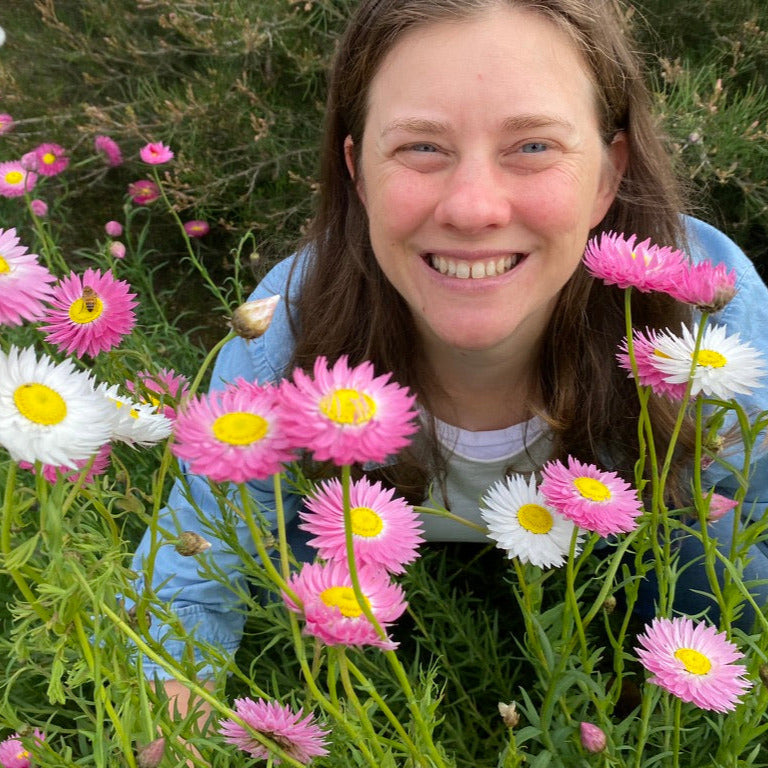
About Me
Hi, I'm Lisa and I'm in love with our unique and beautiful Australian wildflowers.
I’m a florist and wildflower gardener.
I create naturally dried wildflower art, here in Perth, Western Australia.
I grow wildflowers in my garden and supplement my art with locally grown Australian Wildlfowers